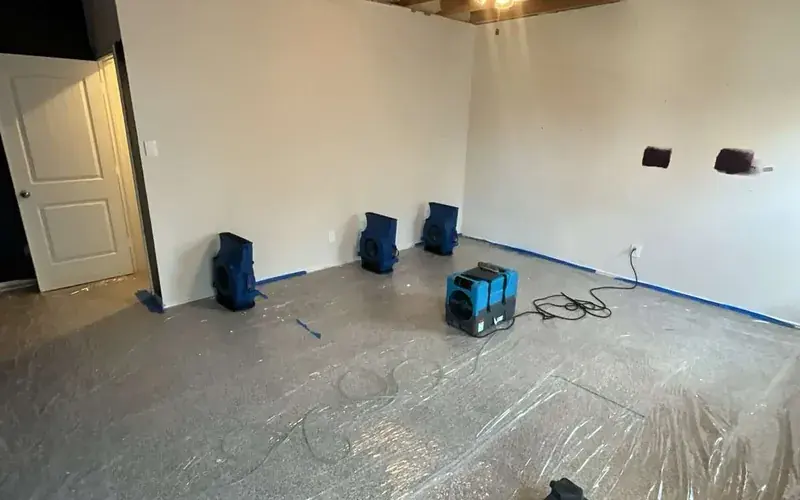
A brown ring on the ceiling, a soft bulge overhead, or a slow drip into a bucket means water is already sitting in the drywall, joists, and insulation above. That water usually starts inside the house, an attic condensate line or a supply line above, not the roof. The crew traces the source, releases it safely, and dries the cavity before the section comes down, across Dale and Caldwell County.
How ceiling leak water damage is handled in Dale
Call & dispatch
The response team answers 24/7, gets your address, and sends the nearest Central Texas crew with truck-mounted extractors, air movers, and moisture meters.
On-site assessment
The crew finds the source and the full reach of the water, including what soaked into subfloor, cabinets, and the wall cavities you cannot see.
Extract & dry
The extraction crew pulls the standing water fast, then runs air movers and dehumidifiers to a measured dry standard, not just the surface.
Verify & document
Moisture readings are logged until the structure reads dry, then the loss is documented with the photos and daily readings an adjuster needs to move a claim.
What causes a ceiling leak from inside the home
The wet ceiling is the symptom you can see. The source is hidden above it, and on most calls around Dale, Kyle, and Buda it traces back to something inside the house, not outside weather.
- An air conditioning condensate line or a rusted drain pan on an attic air handler, dripping through the long cooling season.
- A tub, shower, toilet, washing machine, or water heater on the floor above, leaking down through the ceiling below.
Water through the roof after hail or wind driven rain is a different fix, handled by the roof leak water damage crew, while a leaking appliance above is appliance and supply line work. Either way, the ceiling dries the same way.
AC condensate lines in the humid summers here
The sneakiest ceiling leaks here are the slow summer ones, a clogged or cracked condensate line quietly sending water into the ceiling instead of outside.
- Algae and mineral scale from the hard water here clog the line, so the drain pan overflows.
- It drips a little at a time into a hallway or closet away from the air handler, so the drywall stays damp and mold gets started.
A wet cavity is a setup for mold here, so crews dry the hidden space rather than paint over the stain. The EPA guidance on mold and moisture and the CDC pages on mold and dampness explain why a damp cavity should be dried, not covered up.
The ceiling water damage repair
The goal is simple: find the water, release it safely, and dry the space while saving as much of the ceiling as crews can. One Lone Star Water Restoration crew traces the source, dries the joists and drywall through the structural drying process, and hands deeper growth to the mold remediation crew.
Electrical safety and hidden attic moisture
Water and ceiling light fixtures do not mix, and the wiring often runs right through the wet area above. If a fixture is dripping or a fan feels damp, treat it as a live hazard and keep that circuit off until checked.
- Crews check for water tracking along wiring and junction boxes before anyone works under a wet ceiling.
- Wet blown in insulation mats down, loses its R value, and holds moisture until it is removed.
- Whether the drywall stays or comes out depends on how wet it got and how clean the water was; crews tell you which, and why. Most sudden leaks are covered by insurance, and the water damage cost calculator can size up a loss first.
Ceiling stained, bulging, or dripping in Dale? Talk to a Central Texas crew now. Crews trace the source and dry the cavity before the ceiling comes down, day or night.
☎ Call (737) 302-5065The leak that hides all summer
The ceiling leaks crews see most around Dale and the Kyle to Buda corridor are the slow ones: an attic condensate line or an upstairs supply line dripping a little at a time, staining the ceiling weeks later. If you see a ring that grows after the AC runs hard, or a soft spot that was not there in spring, have the cavity checked before a slow drip turns into a sagging ceiling.
Why Dale and Caldwell County call the local pros first
Rapid local response
The response team answers 24/7, and the nearest crew heads out the moment you call, day or night, across Dale, Lockhart, Kyle, Buda, and San Marcos.
IICRC S500 drying standard
Trained crews with truck-mounted extractors, air movers, and moisture meters, drying to the IICRC S500 standard, not a mop and a box fan.
Claim-ready documentation
The loss is documented with photos and daily moisture readings, the paperwork an adjuster needs to move a claim.
Local water experts
Flash floods off Plum Creek, freeze bursts, and slab leaks on Blackland clay, so the local pros know how water moves through homes here.
Serving Dale, Caldwell County, and the corridor
Seated near Dale on FM 1854, the response team covers Caldwell County and the Kyle, Buda, and San Marcos corridor, day or night.
Seated near Dale on the FM 1854 corridor, local crews cover all of Caldwell County and the Kyle, Buda, and San Marcos corridor, day or night, with rapid local response.
Coverage runs across Dale, Lockhart, Kyle, Buda, San Marcos, Luling, Martindale, Maxwell, Niederwald, Uhland, Mustang Ridge, and Del Valle.
See every community and ZIP covered ›Related restoration services
Common questions, answered
How fast can you respond to a ceiling leak in Dale?
Crews answer live 24/7 and reach most of Dale and Caldwell County, a little longer to the far edges of the service area. A leaking ceiling means water is already sitting in the drywall, joists, and insulation, so the sooner crews find the source and dry it, the less has to be torn out.
My ceiling is stained but not dripping. Do I still need to call?
Yes. By the time a ring shows on the finished side, the drywall and framing above it have usually been damp for a while, and in the humidity here wet material grows mold within a day or two. A surface that feels dry can still hide a soaked cavity, so it is worth a moisture check.
What causes a ceiling leak when the roof looks fine?
Most ceiling leaks crews see around Dale start inside the house: an attic air conditioning condensate line, a tub or shower pan or supply line in an upstairs bathroom, or a washing machine or water heater above. The water travels along the framing before it ever shows on the ceiling below.
Why do air conditioning condensate lines cause so many ceiling leaks here?
The long, humid cooling season means the AC pulls a lot of water out of the air, and that water drains through a small line that clogs easily with algae and hard water scale. When it backs up, the attic drain pan overflows onto the ceiling below, often a room or two away from the air handler.
The water looks like it is coming through the roof. Can you still help?
Yes. Crews handle the water and the ceiling on every call, and when the source is the roof crews document exactly where it failed so it can be repaired, which is the roof leak side of the work. The ceiling below still gets dried the same careful way either way.
Can you save the ceiling drywall or does it have to come out?
If crews catch it early and the water was clean, crews can often dry the drywall and framing in place and save the ceiling. If it has been wet too long, is sagging, or the water was dirty, the affected section comes out so the cavity can be dried and rebuilt. Crews tell you which, and why, before crews cut.
Is a wet ceiling an electrical hazard?
It can be. Ceiling light fixtures, fans, and junction boxes often sit right in the wet area, so if a fixture is dripping keep that circuit off and treat it as live until it is checked. Crews look for water tracking along wiring before anyone works under a wet ceiling.
Will insurance cover ceiling water damage?
Sudden accidental water damage, like an overflow from above or a burst supply line, is usually covered, while damage from a slow leak left unrepaired may not be. The loss is documented with dated photos and moisture readings. Coverage depends on your policy, so it is worth checking with your own insurer.
Dale's water damage crew is standing by
Water sitting means damage spreading. Call Lone Star Water Restoration and a local crew heads out across Caldwell County, day or night.
(737) 302-5065Talk to a Central Texas crew now, day or night